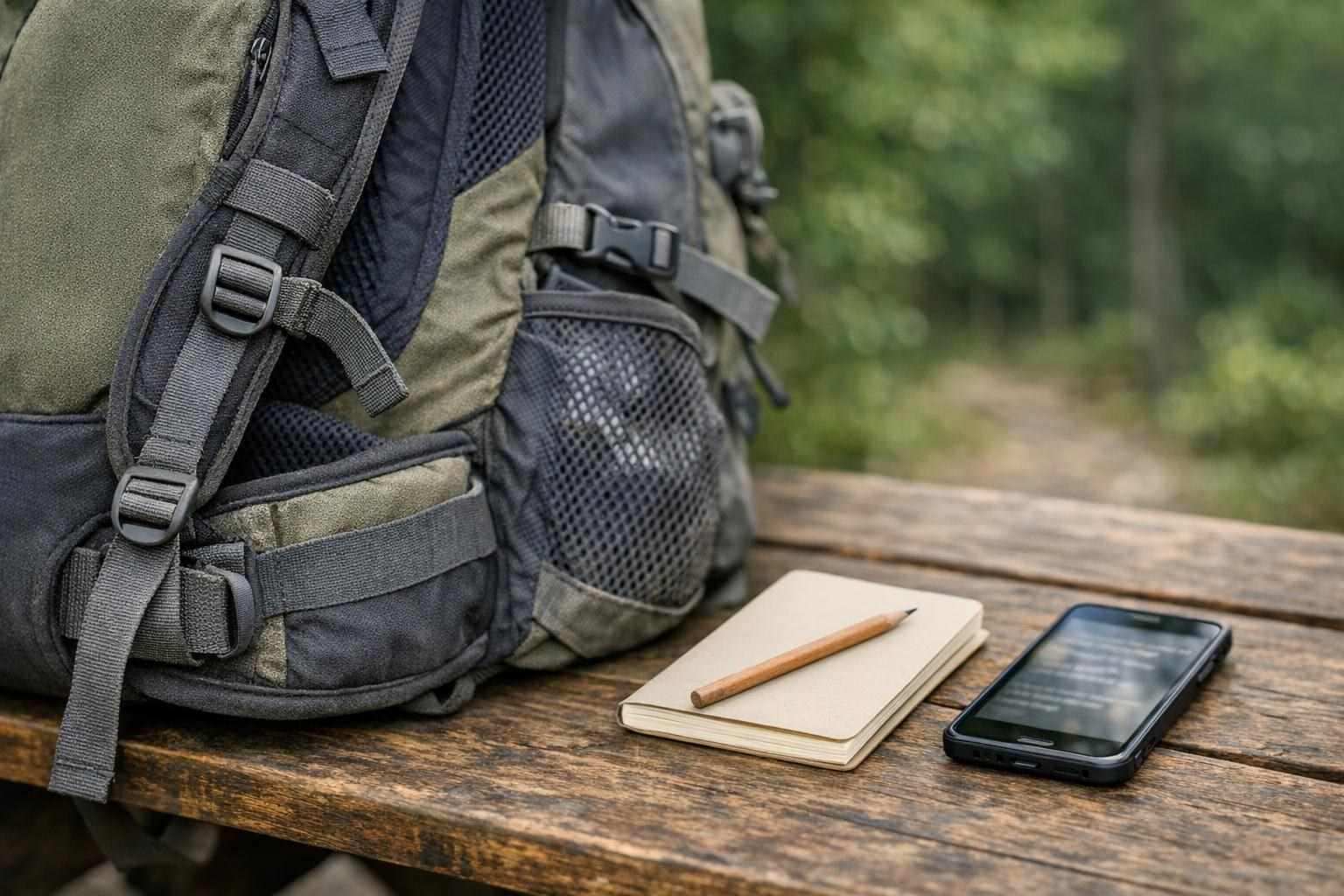
How to Ask an Outdoor Gear Question That Gets Useful Answers
- Wallace Gilbert
- 0
- on Oct 29, 2026
You need advice on the best gear to take on an outdoor activity. However, questions like these can often yield only a list of products and opinions instead of real help, because the seeker's question doesn't quite get across the specifics of their situation. We aim to help you by making sure that you provide enough context so that your question gets the help it deserves.
Define Your Challenge Clearly
Say you're looking for a new backpack. As opposed to asking for general recommendations for the best pack, highlight the problems with your current setup that will dictate your search. The fact that your current pack is uncomfortable after several hours of use on the trail, for example, highlights a fundamentally different set of design problems than a pack that fails to secure your load for uneven terrain.
When discussing special activity gear it is very helpful to describe the specific problem that you are trying to solve. For example, instead of asking for recommendations for camping stoves, you could ask for advice dealing with problems that you are having with your current camp stove in very windy conditions. Are you having a problem in tried to ignite the flame, in trying to maintain the flame or in trying to use the cooked product? In the case of special activity shoes and boots, try to describe the pain or discomfort that you are experiencing and where it is occurring. Is it in the balls of your feet, the heel, the arch or somewhere else? Is it occurring at the beginning of your activity or does it occur later.
Even more important are questions for specialized items (hunting equipment, shooting equipment, laboratory equipment etc.), e.g. for a carrying case for outdoor gear for hiking or for tent repair equipment. If the query does not state the specific problem the inquirer is trying to solve with his/her purchase of new gear instead of using and repairing his/her current outdoor gear, the community members cannot provide appropriate advice.
Context is Key
When framing a question for the community it would be helpful to outline the context or circumstances that would enable people to provide you with better advice or solutions, and avoid embedding inordinate amounts of personal context that adds no value. Consider the following 6 elements of context that you can consider embedding in your question for the benefit of the community.
– Activity Type and Duration: Describe the activity you will be using the gear for, and how long you expect it to last. For example, a day hike, multi-day camping trip, or shooting at the range for a short period of time.
– Environmental Conditions: Would the gear be used in weather that is hot, cold, wet, snowy, etc. Also would it be used in the daytime or at night. Are there any insects that could be encountered such as mosquitoes, etc. Would gear be exposed to the sun, etc.
– Load Specifications: Can you tell us approximately how much weight you'll be hauling and with what sort of fit restrictions (e.g. narrower lumbar, shorter torso). This will help tailer a few pack suggestions best suited for your type of trek.
– Current Equipment: Describe in detail what you currently use (model number, how old it is, what you like/ don't like about it).
– Priorities: Stating your prime needs with this new gear to focus conversation on that particular feature like weight, ruggedness, comfort, or other.
– Constraints: Discuss your limits, for example restrictions in terms of price, available storage space, processing time or anything else that applies.
You don't have to have all the same vocabulary or be technically correct when putting a question up. An image can have straps mis-adjusted, some attachments not clearly stowed, but members will generally respect your privacy and not ask questions you wouldn't want answered. If you're not quite sure of a product's full specification, it's okay to admit that too.
Articulate Your Decision-Making Process
State your decision to be made. The questions you have concerning products may in turn represent a whole set of questions concerning trade-offs which must be made. For example, you may decide that you need to find a pack which is light enough to carry for long periods of time and yet is durable enough to withstand hard use. Or you may be forced to decide whether to purchase a product which is very convenient but not very easy to use as opposed to an alternative which is not as convenient but is far easier to utilize.
A very important point here. For example, someone who has to carry gear a short distance to a campsite might prioritize a very packable option whereas someone planning long days of hiking would prioritize a different set of features. Importantly to acknowledge here that there is not one 'best' option when it comes to gear advice and people in the community will have differing perspectives on various items.
Paint a clear picture of what you consider to be your choices for the gear you need and explain why you came up with that short list in the first place. Define a series of questions that include comparisons of choices with respect to the most relevant features. For example, you might ask which of several camping stoves is more effective for cleaning up after a meal and ease of carrying. That type of question would elicit far more relevant responses from members of your outdoor community than a simple which is best question.